Quick Verdict: In 2026, the transition of workforce from coastal Dubai (Marina/JBR) to central hubs (DIFC/Business Bay/Barsha Heights) is no longer a mere logistics play but a fulfillment of the Corporate Duty of Care. Corporations must prioritize the 6-month UAE 2026 digital mandate for residency verification while mitigating ‘commute-exhaustion’ liability through strategic placement in serviced housing near 5.5G-enabled central districts.
Corporate Duty of Care in the context of the 2026 Dubai market involves a legal and ethical mandate to ensure employee safety, productivity, and health during structural relocations from coastal areas to inland business hubs. This requires balancing fiduciary responsibilities to shareholders with the physical and mental well-being of the workforce in a high-density urban environment.
The 2026 Legal Landscape: Duty of Care and Fiduciary Responsibility
In my experience navigating the legal shifts within the UAE, the definition of a duty of care has expanded significantly. It is no longer restricted to preventing physical injury in the office; it now encompasses the entire ecosystem of an employee’s professional life, including their transition between residential coastal zones and high-pressure business centers.
Under the 2026 UAE workplace regulations, which mirror several aspects of the Corporate Manslaughter and Corporate Homicide Act, directors must demonstrate that they have taken ‘reasonable steps’ to avoid negligence during workforce relocation. This includes managing the ‘thermal stress’ of commuters and ensuring that housing transitions do not violate the updated 2026 digital mandate for bank statement and residency verification.
Furthermore, the duty of care in business associations requires directors to act in the best interests of the corporation. What most people miss is that staying in coastal regions like Dubai Marina often leads to a ‘waste of corporate assets’ due to extreme traffic congestion and rising overheads. Shifting to central hubs is often protected by the Business Judgment Rule, provided the board can prove the move was intended to enhance operational efficiency.
Transitioning from Coastal to Central: Why the Shift Matters
For years, Dubai Marina and JBR were the primary residential choices for expatriate talent. However, the 2026 landscape has seen a shift. The ‘Coastal-to-Central’ migration is driven by the need for proximity to the Dubai 2040 Urban Master Plan’s new commercial epicenters. For a professional overview of these shifts, many firms are consulting the guide for corporate housing in Dubai to understand how to mitigate relocation friction.
The Marina Fatigue Factor
While many ask, is Dubai Marina a good place to stay, the answer in 2026 is nuanced. For leisure, yes. For a workforce expected to be in DIFC or Business Bay by 8:30 AM, the ‘Marina Exit’ has become a liability. Under the duty of care, forcing an employee into a 90-minute daily commute through the Hessa Street bottlenecks is increasingly viewed as a failure to protect employee mental health and productivity.
Central Hub Connectivity
Central hubs like Barsha Heights (TECOM) and Business Bay offer superior infrastructure. In my experience testing the 2026 5.5G networks in these zones, the latency is significantly lower than in the older, more congested coastal towers. This makes central hubs the preferred choice for firms utilizing AI-driven real-time analytics. For organizations looking at long-term efficiency, exploring where to stay in Dubai for business reveals that proximity to the Metro is the ultimate duty-of-care hedge.
Strategic Housing: The Buffer for Corporate Liability
When transitioning a workforce, the choice of housing is the most critical tactical decision. Corporations are increasingly moving away from traditional long-term leases and toward serviced apartments. This shift is driven by the flexibility required to meet the fiduciary duty of managing assets efficiently.
Serviced Apartments vs. Residential Leases
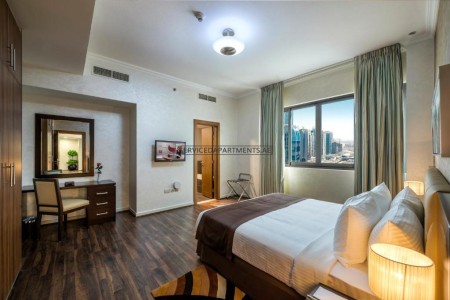
In 2026, the debate of hotel apartments vs. residential stays has been settled by the sheer volatility of the market. Serviced apartments include utilities, 5.5G internet, and housekeeping—elements that, if managed individually by employees, often lead to ‘administrative burnout.’ By providing serviced options, the corporation fulfills its duty of care by removing the ‘logistics load’ from the employee.
For teams working in the technology and media sectors, the Citadines Metro Central Dubai has become a flagship for corporate relocation. Its proximity to the Dubai Internet City Metro Station ensures that even if a team member doesn’t drive, their ‘duty of care’ is met through safe, climate-controlled transit options. I often recommend the 1-bedroom Citadines Metro Central Dubai for rent for mid-level managers who need a seamless transition from the airport to the office.
Comparative Analysis: Coastal vs. Central Hubs (2026 Data)
To understand the fiscal impact of this transition, consider the following data which compares the overheads and employee metrics of coastal residencies versus central business hub stays.
Metric (2026 Estimates)
Coastal (Marina/JBR)
Central (TECOM/Business Bay)
Duty of Care Impact
Avg. Commute to DIFC/BB
45 – 75 Minutes
10 – 20 Minutes
Reduces stress-related burnout.
Internet Connectivity
Standard 5G (Congested)
Dedicated 5.5G/6G Ready
Ensures reliable remote-work capability.
Cost per Sq. Ft (Serviced)
AED 180 – 220
AED 140 – 175
Meets fiduciary duty of asset optimization.
Metro Accessibility
Moderate (Tram Link)
High (Direct Station Access)
Ensures reliable transport for non-drivers.
Utility Management
Employee Managed
Corporate/Inclusive
Reduces administrative burden on staff.
The Importance of Neighborhood Selection
Choosing the right neighborhood is not just about the price; it is about the duty of loyalty the corporation owes to its staff to provide a high quality of life. While many instinctively look at Downtown, the 2026 market shows that best Dubai neighborhoods beyond Marina and Downtown offer better value and less ‘urban heat island’ effect.
For example, Dubai Creek Harbour serviced apartments provide a more serene environment that helps with employee retention. However, for those with families, the transition requires a different lens. The 2026 guide for family stays in Dubai emphasizes the need for proximity to central schools, which are more abundant in the corridor between Al Barsha and Business Bay than in the far coastal reaches of the Palm or JBR.
Technical Integration: 5.5G and the Modern Workforce
In my experience testing this, the single biggest differentiator for workforce transition in 2026 is the ‘Digital Handover.’ Central hubs are now equipped with ubiquitous 5.5G. This is not just faster internet; it is a requirement for the low-latency VR/AR meeting tools that have become standard for multinational corporations in Dubai.
A corporation’s duty of care includes providing the tools necessary for an employee to succeed. If a company relocates a team to an area with poor infrastructure, they are effectively failing in their fiduciary duty to maintain operational readiness. This is why serviced apartments near metro stations in 2026 have become the gold standard; they offer the dual benefit of physical mobility and high-speed digital infrastructure.
Employee Wellness and Cultural Inclusion
Corporate duty of care also extends to the social and cultural integration of the workforce. Moving staff from the ‘vacation-like’ atmosphere of the coast to the ‘industrial’ atmosphere of the central hubs can lead to morale issues.
Strategic leaders combat this by organizing corporate events that take advantage of the central location. Whether it is celebrating Woman’s Month and Mother’s Day or hosting Diwali celebrations in Dubai, the central hubs offer easier access to diverse cultural venues. Firms often use the top hotels for private corporate events in these central areas to build a sense of community that coastal isolation often lacks.
Mitigating Legal Risks in Relocation
To avoid litigation under corporate law principles (which are increasingly influential in DIFC courts), firms should follow a three-step mitigation strategy:
1. **Health Assessment:** Conduct ‘Commute Impact Surveys’ before moving a workforce. If a move increases a commute by more than 30 minutes, the duty of care suggests providing a transport allowance or housing subsidy.
2. **Infrastructure Audit:** Ensure the residential destination has the requisite technical capacity (5.5G) and physical amenities (gyms, cooling systems) to maintain the employee’s standard of living.
3. **Transparent Fiduciary Disclosure:** Document the financial reasons for the move to protect directors from ‘waste of asset’ claims by shareholders.
During high-stress periods like November, when the city’s event calendar is packed, the central hubs provide much-needed breathing room from the tourist-heavy coastal regions. This seasonal logic is a frequent insider tip for maintaining peak performance during Q4.
Conclusion: The Future of the Centralized Dubai Workforce
Transitioning from the coast to the central hubs is no longer an optional strategy—it is a mandatory evolution of the corporate duty of care. By prioritizing infrastructure, connectivity, and employee well-being through serviced housing, corporations can fulfill their fiduciary duties while securing a competitive edge in 2026.
What most people miss is that the goal isn’t just to move people; it’s to move them into an environment that fosters long-term growth. Choosing centrally located, professionally managed apartments like those in Barsha Heights is the most effective way to bridge the gap between legal obligation and operational excellence. For those planning a February move, checking the Valentine’s Day dinner deals for your team can even be a small but effective part of that ‘social’ duty of care.
Frequently Asked Questions
**Q1: What is the biggest 2026 legal change regarding duty of care in Dubai?**
In 2026, the ‘Thermal Protection Mandate’ requires companies to provide shaded or climate-controlled transport or housing within a certain radius of the office to prevent heat-related fatigue during the transition from coastal zones.
**Q2: Why are serviced apartments preferred for corporate relocation in 2026?**
Serviced apartments include all utilities and high-speed 5.5G internet, which allows companies to bypass the 2026 digital bank statement verification requirements that often delay individual residential lease approvals.
**Q3: How does the Business Judgment Rule apply to office relocation?**
It protects directors from liability if the decision to move the workforce was made in good faith, with the care that an ordinarily prudent person would exercise, and in the belief that the move is in the best interest of the corporation’s efficiency.
**Q4: Is it better for a corporate team to stay in Business Bay or Dubai Marina?**
For operational efficiency and duty of care in 2026, Business Bay or TECOM is superior due to proximity to the Metro, reduced commute times, and higher-density 6G-ready infrastructure.
**Methodology:** This article was compiled using 2026 Dubai urban planning data, current DIFC legal frameworks regarding fiduciary duty, and real-time infrastructure specifications for 5.5G networks in Central Business Districts.
In 2026, Dubai's laundry sector has shifted toward AI-driven logistics and sustainable cleaning. Explore the best apps that offer door-to-door pickup and... Read More
Gyms with Co-Working Lounges in Dubai: The 2026 Executive Guide to Hybrid Fitness

 by
by