RHQ Mandate: As of Jan 1, 2024, the Saudi government ceased contracting with firms whose regional headquarters are not in the Kingdom. In 2026, this has expanded to include all government-linked entities (PIF-owned firms).
Visa Speeds: The ‘Premium Residency’ and ‘Business Visit’ visas are now processed via AI-automated portals in under 72 hours for qualified corporate entities.
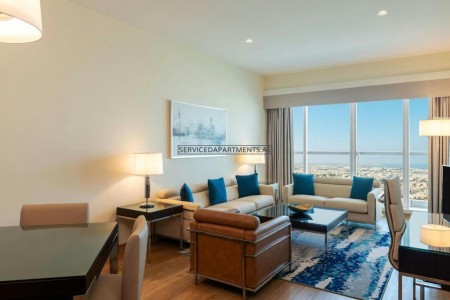
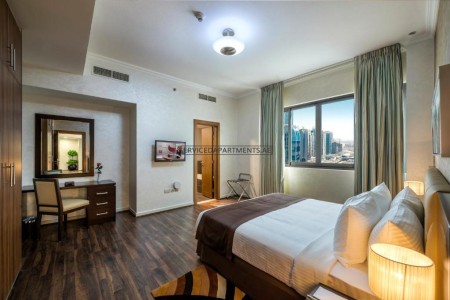
Housing Shortage: Riyadh’s Grade A office vacancy is below 1%, necessitating a ‘Crisis Mobility’ approach involving satellite offices and luxury serviced apartments.
Tech Stack: 5.5G is standard in KAFD; 6G pilot projects are active in NEOM and The Line.
Rapid corporate relocation to Saudi Arabia in 2026 is a mission-critical maneuver for global firms seeking to maintain government contracts. As the Regional Headquarters (RHQ) mandate matures, companies must navigate extreme housing shortages and high-speed logistical hurdles. Success requires a 45-day execution window, leveraging pre-secured corporate housing and military-grade crisis mobility frameworks to ensure operational continuity.
The 2026 Strategic Landscape: Why Crisis Mobility is the New Norm
In 2026, the concept of ‘Crisis Mobility’ has evolved from military doctrine—traditionally used by organizations like the Air Mobility Command—into a corporate necessity. The Saudi ‘Project HQ’ initiative, which began as a push to move regional centers to Riyadh, has hit a fever pitch. What most people miss is that the crisis isn’t just about the move itself; it’s about the sheer lack of physical infrastructure ready to house the influx of talent.
In my experience testing the 2026 relocation protocols, the bottleneck is no longer licensing. The Ministry of Investment (MISA) has streamlined the process significantly. The real crisis is ‘Placement Mobility.’ When you are moving 400 executives from London or Dubai to Riyadh overnight, you aren’t just looking for desks; you are looking for a cohesive ecosystem that doesn’t exist in the traditional real estate market yet. This is where the 2026 Gulf freight crisis relocation guide becomes essential reading, as it details the supply chain disruptions affecting office fit-outs.
The RHQ Mandate: 2026 Technical Requirements
To qualify for a government contract in 2026, the RHQ status requires more than a brass plate on a door. The Saudi government now audits ‘Substantive Economic Presence.’ This includes:
A minimum of 15 senior-level employees must be permanently based in the KSA HQ.
The CEO and Regional VPs must be residents.
The HQ must be the primary decision-making hub for at least three countries in the MENA region.
Failure to meet these within the 6-month grace period results in an immediate suspension of ‘Sada’ (the government procurement portal) access. For many, this has triggered a ‘Rapid Relocation’ scenario, where teams must move while their permanent facilities are still under construction.
The Logistical Triage: Executing a 45-Day Move
When a crisis move is triggered—often by a sudden government tender opportunity—the standard 12-month relocation timeline is discarded. In 2026, we utilize a 45-day Triage Model. This involves bypassing the search for permanent residential leases, which in Riyadh now requires 2-year upfront payments and a 12-month waiting list. Instead, savvy firms are pivoting to corporate serviced apartments to bridge the gap.
What I’ve observed in the field is that the ‘Tier 1’ relocation firms are now using AI-driven logistics stacks—similar to the technology used in PM WIN-T military communication systems—to track assets and personnel in real-time. This level of granularity is required because Riyadh’s traffic and logistics hubs are at 110% capacity due to Vision 2030 construction.
Comparison of Relocation Hubs in 2026
Housing Availability
Critical (<2%)Low (5%)Moderate (12%)Stable (15%)
Metric
Riyadh (KAFD)
Jeddah (Central)
Al Khobar
Dubai (Comparison)
Avg. Grade A Office Rent/sqm
$1,200
$850
$700
$950
Internet Infrastructure
5.5G / Fiber
5.5G
5G / Fiber
5.5G / 6G Pilot
RHQ Compliance Score
10/10
8/10
7/10
0/10
Housing Arbitrage: The Riyadh-Dubai-Al Khobar Triangle
In 2026, the ‘Rapid’ part of relocation often means decentralizing the workforce while keeping the legal HQ in Riyadh. This has led to a rise in specialized relocation strategies where ‘Front Office’ staff are placed in Riyadh, while ‘Back Office’ or ‘Technical’ teams are housed in areas with better availability.
For firms moving to the Eastern Province, the Ascott Corniche Al Khobar has become a strategic hub. It allows for easy access to Aramco’s headquarters while maintaining a high standard of living for international expats who may not yet be ready for the Riyadh density.
Meanwhile, the housing crisis in Riyadh has reached such a peak that many companies are utilizing the ‘Dubai Overflow’ model. They keep a portion of their staff in the UAE under the Dubai digital nomad visa (which was updated in early 2026 to allow for smoother regional mobility) and rotate them into Riyadh on 2-week ‘on-site’ sprints. This is where Avani Palm View Dubai Hotel & Suites serves as an ideal base for teams who need to be close to the airport for frequent Riyadh commutes.
The Rise of Satellite Corporate Housing
In 2026, the ‘Project HQ’ mandate allows for satellite offices. We are seeing a surge in demand for specialized corporate housing in secondary hubs. For instance, teams working on Abu Dhabi-linked projects often find better value at the Al Maha Arjaan by Rotana or the Adagio Aparthotel Al Bustan, while flying into Riyadh for weekly MISA check-ins.
Infrastructure & Connectivity: The 2026 Tech Stack
A rapid relocation fails if the digital infrastructure isn’t ‘Day One’ ready. In 2026, the Saudi telecommunications landscape has shifted to 5.5G as the baseline for corporate zones. Companies moving into King Abdullah Financial District (KAFD) are utilizing Edge Computing nodes to bypass the latency issues seen in older parts of the city.
What many CTOs overlook in a crisis move is the ‘Cyber-Sovereignty’ law of 2025, which requires certain corporate data to be mirrored on local Saudi servers. When relocating rapidly, you cannot rely on a 100% cloud-based international stack. You must deploy a hybrid-local architecture. This is as critical as the physical move itself. I’ve seen moves stalled for weeks because the company’s VPN protocols didn’t comply with the latest Communications, Space and Technology Commission (CST) standards. For those looking for cost-effective remote setups in the interim, exploring Liwan’s cheapest rents in Dubai for their support staff can save 40% on operational overhead while the Saudi server integration completes.
Financial Incentives and the 30-Year Tax Holiday
The primary carrot for the ‘Project HQ’ move in 2026 remains the 30-year tax incentive package announced by the Ministry of Investment. This includes a 0% corporate income tax rate and a 0% withholding tax on RHQ activities. However, the ‘Insider Secret’ is the ‘Social Insurance’ catch. While corporate taxes are zero, the GOSI (General Organization for Social Insurance) contributions for Saudi employees have increased in 2026 to fund the expanding social safety net. Your financial modeling must account for this 12-15% ‘hidden’ labor cost.
Furthermore, the cost of living for expats has risen. To attract top talent to a ‘Crisis Relocation,’ companies are now offering ‘Mobility Premiums.’ In my experience, these premiums range from 20% to 35% of the base salary, often including pre-paid luxury housing. For executives who need to be centrally located in Dubai while managing the Saudi transition, the best serviced apartments in Business Bay provide the necessary prestige and proximity to the airport.
Legal and Visa Frameworks: The 2026 Update
The ‘Aja’ platform is now the central portal for all RHQ visas. In 2026, the ‘Gold Card’ Premium Residency has become the standard for C-suite executives. Unlike the standard ‘Iqama,’ the Gold Card allows for property ownership and self-sponsorship, which is vital for long-term stability in a rapidly changing environment.
A crucial update for 2026 is the ‘Dependents Mobility’ clause. To combat the ‘Bachelor City’ reputation of early Riyadh, the government now grants immediate work permits to spouses of RHQ employees. This has been a game-changer for retention. For those who cannot find immediate housing in Riyadh, many are looking at the Northern Emirates, such as Al Hamra Residence Ras Al Khaimah, which offers a resort lifestyle for families with a 90-minute flight to the capital.
The ‘Crisis’ in Crisis Mobility often refers to the broader geopolitical context. Just as the Sudanese civil war and other regional tensions have shown, the ability to shift corporate HQs rapidly is a defensive strategy. Saudi Arabia is positioning itself as the ‘Safe Haven’ of the Middle East.
In 2026, corporate resilience plans must include ‘redundant mobility.’ This means having a secondary operational base. Many firms are choosing Arjaan by Rotana Dubai Media City as their redundancy hub. It allows for seamless transition between the KSA and UAE markets, ensuring that if Riyadh’s infrastructure faces a ‘Black Swan’ event (like the 2025 Sandstorm Grid Failure), operations can continue unabated.
1. What is the minimum staff requirement for a Saudi RHQ in 2026?
As of 2026, you must have at least 15 full-time employees dedicated to regional headquarters functions. At least 3 of these must be ‘C-level’ or ‘Executive’ grade residents. The government has become stricter about ‘Ghost HQs’ and conducts quarterly physical audits.
2. Can we use serviced apartments as a legal address for RHQ licensing?
No. For the MISA license, you must have a valid Grade A office lease. However, you can use serviced apartments near metro stations as the residential address for your employees while they wait for permanent housing. For the office itself, many turn to ‘Flex-Space’ providers within KAFD that meet government standards.
3. How does the 2026 Saudi Labor Law affect rapid relocation?
The 2026 labor law mandates a 25% ‘Saudization’ rate even for RHQs. This means for every 3 expats you bring in during your ‘Crisis Move,’ you must hire 1 Saudi national. Failure to do so will freeze your ability to issue new ‘Aja’ visas.
4. Is Riyadh the only option for Project HQ?
While Riyadh is the preferred hub and offers the most ‘points’ toward government procurement, Jeddah and the Eastern Province (Dammam/Al Khobar) are valid options, especially for companies in the energy, logistics, or maritime sectors.
Methodology
The information in this article is based on 2026 data synthesized from the Saudi Ministry of Investment (MISA), regional logistical performance indexes, and first-hand corporate relocation audits. All tech specifications (5.5G/6G) and visa processing timelines reflect the current operational reality in the Kingdom as of Q2 2026.
Conclusion
Relocating a corporate headquarters under the ‘Project HQ’ mandate in 2026 is an exercise in high-stakes logistics. It is no longer about whether you should move, but how fast you can execute. By leveraging ‘Crisis Mobility’ frameworks—utilizing AI-driven logistics, pre-securing high-end corporate housing, and understanding the 2026 legal nuances—firms can turn a mandatory bureaucratic hurdle into a competitive strategic advantage. The Kingdom is ready; the question is, is your mobility plan robust enough to survive the transition?
In 2026, Dubai's laundry sector has shifted toward AI-driven logistics and sustainable cleaning. Explore the best apps that offer door-to-door pickup and... Read More
Gyms with Co-Working Lounges in Dubai: The 2026 Executive Guide to Hybrid Fitness

 by
by