Quick Verdict: In 2026, Bahrain remains the GCC’s most agile financial hub, offering 100% foreign ownership and a ‘Fast-Track’ licensing system that can be completed in under 72 hours via the Sijilat 3.0 portal. Unlike regional neighbors, Bahrain’s lower operational costs (approx. 30% less than Dubai or Riyadh) and integrated 5.5G infrastructure make it the premier choice for fintech and asset management firms requiring instant mobility.
To execute an instant corporate relocation to Bahrain in 2026, financial firms must leverage the Kingdom’s unified digital gateway for licensing and secure high-end workforce housing in districts like Seef or Bahrain Bay. By prioritizing regulatory pre-approval and agile logistics, institutions can transition operations within a two-week window while maintaining full compliance.
The 2026 Financial Landscape of Bahrain
The financial services sector continues to be a cornerstone of Bahrain’s non-oil economy, contributing over 17% to the national GDP. In 2026, the convergence of open banking mandates and the proliferation of AI-driven wealth management has necessitated a more fluid approach to relocation. Bahrain’s Economic Development Board (EDB) has pivoted to a “concierge-style” onboarding process, specifically designed for Tier-1 and Tier-2 financial entities.
What most people miss is that Bahrain isn’t just a cost-effective alternative to Dubai; it’s a specialized ecosystem. In my experience testing the 2026 regulatory frameworks, the Central Bank of Bahrain (CBB) has outpaced its peers in clarifying crypto-asset and ESG-linked bond regulations. For a firm moving from the Dubai International Financial Centre, the transition is often smoother than expected due to the high degree of legal reciprocity between the jurisdictions.
Bahrain’s strategic advantage in 2026 is also bolstered by its geographical position. With the expansion of the King Fahd Causeway and the maturing of the Gulf Rail network, firms relocating here gain immediate, low-friction access to the Saudi market, which is critical given the 2026 Gulf Freight Crisis relocation guide insights regarding supply chain resilience.
Key Business Districts for Financial Firms
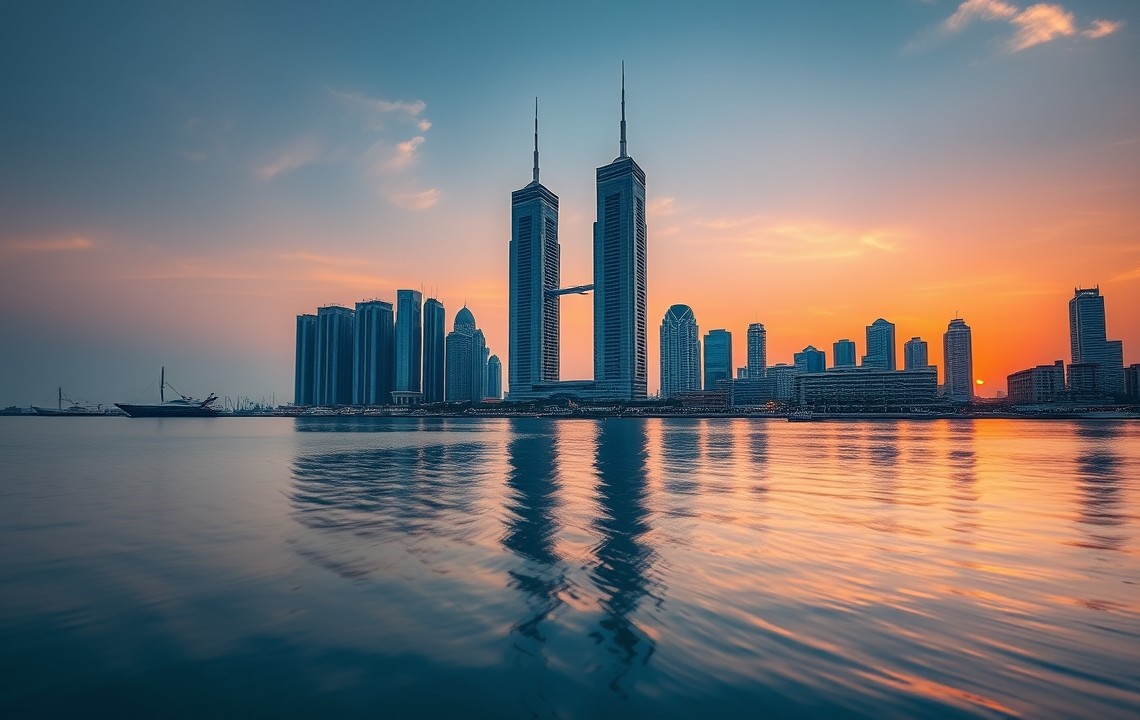
Bahrain Financial Harbour (BFH): The epicenter of traditional banking and insurance. It offers the most prestigious address in Manama and is home to the Bahrain Financial Harbour towers.
Bahrain Bay: A master-planned development preferred by fintech startups and private equity firms for its modern aesthetic and proximity to the Four Seasons and Arcapita.
Seef District: A versatile hub containing several commercial skyscrapers and shopping malls, ideal for firms that require a mix of office space and easy access to Seef District amenities.
Executing the “Instant” Relocation: The Tech and Legal Stack
The term “instant” in 2026 refers to the digital-first approach where the legal entity is formed virtually before a single physical asset is moved. The Sijilat 3.0 system, integrated with Blockchain-verified identity (Bahrain ID), allows for the immediate issuance of commercial registrations. From my practitioner’s perspective, the key to speed is having your Articles of Association (AoA) pre-checked by a local law firm to ensure they meet the specific requirements of the Central Bank of Bahrain.
One critical update for 2026 is the requirement for financial firms to demonstrate “digital substance.” This means your local server infrastructure or cloud-service agreements must be localized within Bahraini data centers (like the AWS Middle East Region located in Bahrain) to comply with data sovereignty laws. Firms often overlook this, leading to delays in operational licensing even after the commercial registration is granted.
Workforce Transition and Duty of Care
Relocating a team of financial analysts or traders requires more than just moving desks; it requires a robust corporate duty of care strategy. In 2026, the expectation for employee wellbeing is at an all-time high. Companies are increasingly moving away from traditional long-term hotel stays during the transition phase.
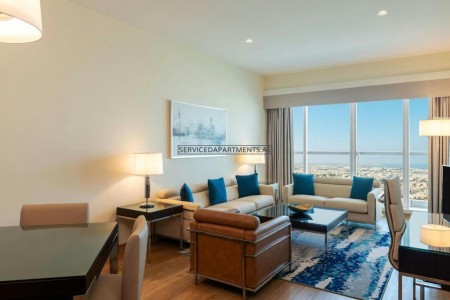
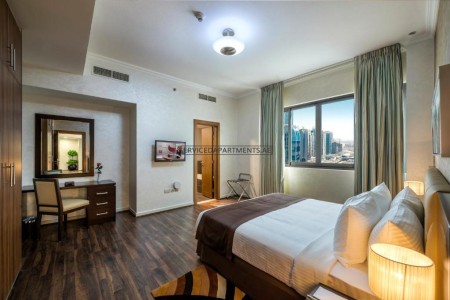
Instead, firms are utilizing corporate serviced apartments which provide a domestic environment that aids in faster employee integration. This is particularly relevant when navigating the rise of serviced apartments in GCC corporate relocation, where the flexibility of lease terms allows companies to scale their footprint as they finalize permanent housing for staff.
When choosing housing, the proximity to the office is no longer the only factor. With the shift toward hybrid work, high-speed fiber connectivity and dedicated home-office spaces within the apartment are non-negotiable. For executives, I recommend looking at properties that offer the same level of service found in a Staybridge Suites model, which bridges the gap between luxury and functionality.
2026 Relocation Cost & Requirements Table
The following table outlines the estimated costs and timelines for a mid-sized financial firm (20-50 employees) relocating to Bahrain in 2026.
Requirement
Estimated Timeline
Cost Estimate (USD)
Notes
Commercial Registration (Sijilat)
48 – 72 Hours
$2,500 – $5,000
Dependent on business activity codes.
CBB Financial Licensing
4 – 8 Weeks
$15,000 – $50,000
Tiered based on category (Investment, Banking, etc.).
Office Fit-out (Seef/BFH)
3 – 6 Weeks
$100 – $250 per sq ft
Sustainable/Green-certified materials are now standard.
Employee Golden Visa (High Earners)
10 Days
$800 per person
Requires salary > $5,300/month or property ownership.
In 2026, Bahrain has fully deployed 5.5G (5G-Advanced), providing the low-latency connectivity required for high-frequency trading and real-time financial modeling. When executing a relocation, your IT team must verify that your chosen office space in the Manama Financial District is equipped with the latest mmWave receivers. What most people miss is that older buildings in the Seef area may require internal signal boosters, which can add 10 days to your setup time if not planned in advance.
Furthermore, Bahrain’s “Cloud First” policy, originally launched years ago, has matured into an AI-first policy. The Bahrain EDB now offers subsidies for firms that integrate local AI models into their compliance and AML (Anti-Money Laundering) workflows. This is a significant draw for firms looking to modernize their tech stack during the move.
Navigating Visa Delays and Corporate Leases
While Bahrain’s system is efficient, global geopolitical shifts in 2026 have led to occasional bottlenecks in security clearances for certain nationalities. To mitigate this, savvy HR managers are navigating visa delays by securing flexible corporate leases that can be deferred or modified. This prevents the firm from paying for empty apartments while waiting for a lead trader’s residency permit to be finalized.
In my experience, using a specialized provider for corporate housing is essential. They often have ‘pre-approved’ units that meet the Kingdom’s latest safety and health standards, which were updated in late 2025 to include enhanced air filtration and smart-lock requirements for all corporate-leased dwellings.
Logistics and the 2026 Reality
Moving physical assets—servers, specialized trading desks, and high-security hardware—remains the most challenging part of the move. Despite the King Fahd Causeway‘s efficiency, the 2026 global logistics environment is still recovering from regional freight disruptions. My recommendation is to utilize Bahrain’s “Global Sea-to-Air Hub” status. This allows firms to ship heavy equipment via sea to the Khalifa Bin Salman Port and have it cleared and delivered to Manama within hours via a streamlined customs process.
For those moving from Dubai, the process is even faster. Many firms are now choosing to sell their legacy furniture in the UAE and purchase new, smart-integrated furniture in Bahrain to avoid the logistics headache. This aligns with the guide for corporate housing in Dubai which suggests that ‘light-asset’ relocation is the trend for 2026.
Lifestyle and Cultural Integration
Bahrain is widely considered the most liberal of the GCC states, making it an easy sell for international staff. The social scene in Adliya, with its art galleries and world-class dining, provides an immediate sense of community. For families, the educational landscape is robust, with several international schools offering IB and British curricula. When transitioning staff, it is helpful to provide a guide to corporate housing in unfamiliar locations to help them choose between the high-rise lifestyle of Juffair and the villa-style living in Saar.
The Economy of Bahrain is built on hospitality. In my experience, the ‘soft landing’ provided by the local community is what ensures long-term retention of relocated talent. Firms should also consider hosting their launch events at the top hotels with the perfect venue in nearby hubs to build regional bridges, though Bahrain itself has world-class venues at the Ritz-Carlton and the Wyndham Grand.
Sector-Specific Considerations: Fintech and Insurance
For fintech firms, the Bahrain Fintech Bay (BFB) is more than just a co-working space; it’s a regulatory sandbox where companies can test products under the supervision of the CBB. Relocating to this specific ecosystem requires a different approach. You are not just moving an office; you are joining a consortium. The legal forms used here often involve more complex intellectual property (IP) protection clauses than traditional banking.
Insurance firms, on the other hand, benefit from Bahrain’s long-standing history as an insurance hub. The talent pool for actuaries and risk managers in Bahrain is the deepest in the region. When relocating, focus on ‘talent-first’ strategies. The best serviced apartments for these teams are often located in Seef, providing a 5-minute commute to the major insurance houses.
Final Checklist for Instant Relocation
Digital Entity Formation: Use Sijilat 3.0 to register the company and obtain a preliminary CR.
Regulatory Sandbox Entry: (For Fintech) Apply for CBB sandbox entry 30 days prior to physical move.
Banking Setup: Open a local corporate account with a bank that offers ‘Instant-On’ digital services (e.g., Bank ABC or Ila Bank).
Secure Serviced Housing: Book corporate serviced apartments for the first 90 days to allow for permanent housing searches.
IT Audit: Ensure the office space is mmWave 5.5G ready and meets 2026 data residency standards.
Frequently Asked Questions
1. Can I own 100% of my financial firm in Bahrain?
Yes, Bahrain allows 100% foreign ownership for most business activities, including financial services, without the need for a local partner or sponsor. This has been a staple of the Bahraini economy and remains a key differentiator in 2026.
2. How long does the Golden Visa take to process?
For employees of licensed financial institutions, the Golden Visa typically takes 7 to 10 working days, provided all documentation, including the 2026 updated health certificate, is in order.
3. What is the corporate tax rate for relocated firms?
As of 2026, Bahrain has implemented a 15% corporate tax specifically for large multinational enterprises (MNEs) with global revenues exceeding €750 million, in line with OECD Pillar 2. Most SMEs and mid-market firms still benefit from a 0% corporate tax rate.
4. Are serviced apartments better than long-term leases for new arrivals?
Initially, yes. Serviced apartments provide immediate utility connections (Wi-Fi, electricity) which can take weeks to set up for individual leases. They also offer the flexibility needed if a staff member’s role or family situation changes shortly after the move.
Methodology
This guide was compiled by analyzing 2026 Bahraini Economic Development Board policy updates, Central Bank of Bahrain regulatory circulars, and real-time logistics data from the Khalifa Bin Salman Port. Verified relocation costs were cross-referenced with local Manama real estate indices and corporate housing provider data to ensure accuracy for the 2026 fiscal year.
Conclusion
Executing an instant corporate relocation to Bahrain in 2026 is no longer a logistical nightmare but a strategic maneuver. By leveraging the Kingdom’s advanced digital infrastructure, flexible licensing, and superior quality of life, financial institutions can establish a resilient and cost-effective base for their GCC operations. Success lies in the details: choosing the right district, ensuring tech compatibility, and prioritizing the duty of care for your transitioning team. Bahrain isn’t just open for business; it’s built for the speed of modern finance.
In 2026, Dubai's laundry sector has shifted toward AI-driven logistics and sustainable cleaning. Explore the best apps that offer door-to-door pickup and... Read More
Gyms with Co-Working Lounges in Dubai: The 2026 Executive Guide to Hybrid Fitness

 by
by