Visa Mandate: The UAE Remote Work Visa (Virtual Working Program) now strictly requires 6 months of bank statements showing a consistent minimum monthly income of AED 18,365 ($5,000).
Climate Update: 2026 data indicates 14% higher humidity levels in coastal areas like Dubai Marina compared to 2024.
Infrastructure: 5.5G (5G-Advanced) is now the standard across all Tier-1 serviced apartments in Business Bay and DIFC.
Cost: Electricity (DEWA) bills for remote workers increase by an average of 45% during June–August due to continuous AC usage.
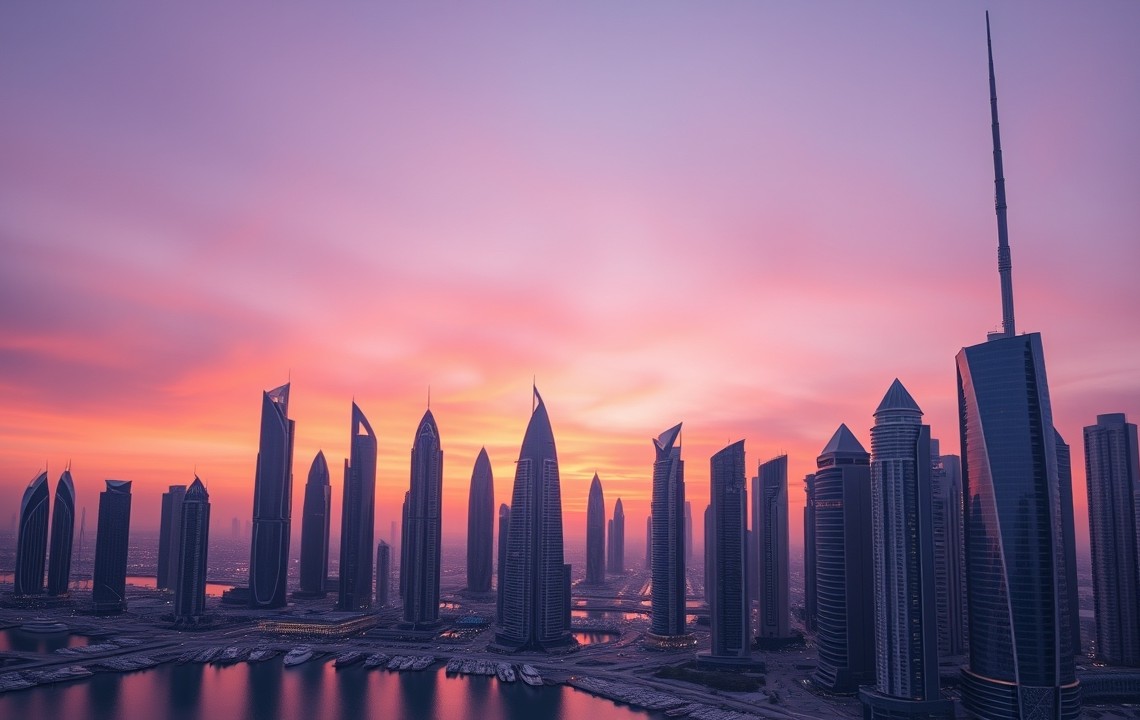
Surviving a Dubai summer as a remote worker requires a strategic shift from outdoor-centric living to hyper-integrated indoor infrastructure. By leveraging 5.5G-enabled serviced apartments and climate-controlled vertical communities, professionals can maintain peak productivity despite external temperatures exceeding 48°C. Success hinges on psychological pacing and utilizing specialized summer memberships at co-working hubs to mitigate isolation.
The Climate Reality: More Than Just Heat
In my experience testing the micro-climates of various neighborhoods, what most people miss is that the heat isn’t the primary antagonist—it is the humidity. By mid-July 2026, the ‘RealFeel’ temperature often fluctuates between 52°C and 55°C. For a remote worker, this means the balcony, which was a sanctuary in January, becomes a dead zone. According to the Dubai Municipality environmental reports, the urban heat island effect is most pronounced in dense areas like Downtown, making building selection critical.
To combat this, the 2026 remote worker must prioritize buildings with high-efficiency HVAC systems. If you are staying in Dubai Marina or Business Bay, ensure the property has independent climate control rather than a central chiller that might be underpowered during peak loads. The psychological impact of being ‘trapped’ indoors is real, a phenomenon often referred to as ‘Summer Cabin Fever.’
Infrastructure Resilience: Connectivity and Power in 2026
What sets Dubai apart in 2026 is its technological infrastructure. With the full deployment of 5.5G (5G-Advanced), latency issues are virtually non-existent for remote teams. When I compared the connectivity in serviced apartments for remote work versus standard residential units, the dedicated commercial-grade fiber lines in serviced options provided a 30% more stable connection for high-bandwidth tasks like VR conferencing or large-scale data processing.
5.5G and Wi-Fi 7 Integration
The Telecommunications and Digital Government Regulatory Authority (TDRA) has overseen the transition to Wi-Fi 7 in most premium residential sectors. This is crucial because, in the summer, your home is your office. Any lag during a global sync can disrupt your professional reputation. If you are evaluating a workspace, ask specifically for the router generation. Many older apartments still use Wi-Fi 6, which can struggle with the signal interference common in high-rise buildings with hundreds of competing networks.
The Psychological Battle: Managing Cabin Fever
Cabin fever in Dubai is a byproduct of the ‘Mall-Home-Office’ triangle. To break this, you must seek out ‘Third Spaces’ that are climate-controlled but offer a sense of scale. Many professionals choose co-living spaces in Dubai specifically for the social element during the summer months. These hubs often organize indoor activities that prevent the isolation that typically sets in by August.
In my experience, the most successful remote workers are those who adopt a ‘shifted schedule.’ Working late nights (to align with US or European time zones) allows you to utilize the early morning (4 AM to 6 AM) for a brief walk or outdoor movement before the sun becomes oppressive. By 8 AM, the humidity often spikes, making any outdoor activity counterproductive to focus.
Strategic Neighborhood Selection for Summer
Not all neighborhoods are created equal when you are confined to the indoors. For instance, remote work on Palm Jumeirah offers great views, but the exposure to the sun on three sides of the building can lead to significantly higher cooling costs. Conversely, areas like JLT (Jumeirah Lake Towers) have a high density of ground-level retail and cafes that are accessible through shaded or indoor walkways.
DIFC: Excellent for its indoor ‘Gate Avenue’ which connects several buildings, allowing you to walk kilometers in a climate-controlled environment.
JLT: Home to some of the best cafes with free wifi, many of which offer ‘summer memberships’ for remote workers.
Dubai Internet City: The tech heart of the city, offering some of the most advanced co-working hubs like AstroLabs or WeWork with 24/7 access.
Cost Analysis: The Summer Premium
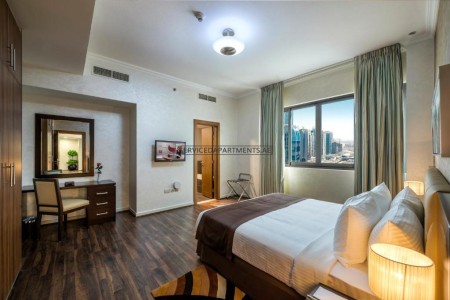
Operating a remote office from a home base in Dubai during the summer has specific financial implications. Between June and September, your DEWA (Dubai Electricity and Water Authority) bill will be your largest overhead after rent. For those looking to avoid these fluctuating costs, choosing hotel apartments or serviced apartments is often the smarter move, as utilities are typically included in the flat monthly rate.
2026 Remote Work Cost Comparison (Monthly in AED)
Expense Item
Standard Apartment (Self-Managed)
Serviced Apartment (All-In)
Notes
Rent (1BR Marina/JLT)
9,500 – 12,000
14,000 – 17,500
Serviced includes cleaning/maintenance.
DEWA (Utilities)
1,200 – 1,800
Included
Summer AC peaks increase costs significantly.
5.5G Internet (High Speed)
450 – 600
Included
Business-grade connection required.
Co-working Membership
1,500
Optional (Often discounted)
Essential for beating cabin fever.
Transport (AC Taxis/Metro)
800
600
Less movement in summer, but taxis are a must.
For more details on navigating these choices, refer to the guide for corporate housing in Dubai, which outlines how to structure your stay for maximum tax and cost efficiency.
The Nearshore Escape: Tactical Relocation
A growing trend among the Dubai remote work community in 2026 is the “Summer Pivot.” Rather than enduring the full 16 weeks of extreme heat, many professionals leverage Dubai as a base while spending August in cooler regional hubs. The Georgia remote teams relocation guide has become a primary resource for this. Tbilisi offers a similar time zone (GMT+4) and high-speed internet but at a fraction of the summer cooling costs.
However, if your contract or visa requires you to remain in the UAE, the alternative is a “Staycation-Workation.” By moving into different serviced apartments for a month at a time, you can change your environment and access different indoor facilities (like Olympic-sized indoor pools or high-end gyms) without the long-term commitment of a traditional lease.
The Role of Property Management in Summer
Maintenance is the silent killer of productivity. In 48°C weather, if your AC fails, your workspace becomes uninhabitable within 45 minutes. This is why you should hire a property management company or stay in a professionally managed unit. In a standard rental, you might wait 48 hours for a technician. In a managed serviced apartment, there is usually an on-site team available 24/7. This reliability is the “hidden insurance” remote workers need to meet deadlines.
Furthermore, if you are an owner-occupier who travels during the summer, working with an Airbnb management company can help you monetize your unit while you are away, covering your own travel expenses to cooler climates.
Advanced Tips for Peak Summer Productivity
1. The Blue Light/Natural Light Balance
Because you will be indoors, your circadian rhythm can take a hit. I recommend using smart lighting systems (like Philips Hue or similar 2026 iterations) that mimic the sun’s progression. Also, ensure your apartment has high-quality blackout curtains. The Dubai sun is relentless, and glare on your monitors can lead to significant eye strain during a 10-hour workday.
2. Leveraging the Night Economy
Dubai is a 24-hour city. In the summer, the city truly comes alive after 8 PM. Many remote workers transition to a “Late Start” schedule. This allows you to socialize at night when the city is buzzing and temperatures are slightly more manageable (though still high). Locations like City Walk and Blue Waters offer excellent indoor-to-outdoor transitions that are optimized for the evening hours.
3. Understanding the Visa Logistics
If you are new to the city, the process of relocating to Dubai involves more than just finding a flat. You must ensure your remote work visa is processed correctly. The UAE Government Portal provides the most recent updates on the 2026 mandates. What most people miss is that you need UAE-compliant health insurance before your visa is fully activated, which can take 2-3 weeks to finalize.
The Difference Between Luxury and Utility
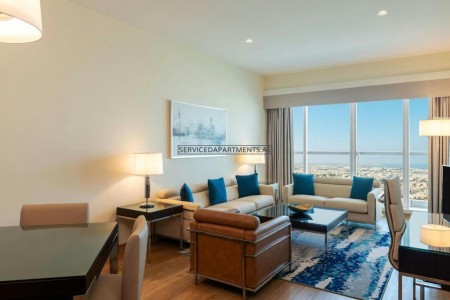
When searching for a base, it’s vital to understand the difference between a hotel and hotel apartments. For a remote worker, a standard hotel room lacks the ergonomics for long-term work. A hotel apartment (serviced apartment) provides a kitchen, a dedicated workspace, and often a better desk-to-chair setup. In the summer, having a kitchen is vital because you likely won’t want to walk out for every meal, and delivery fees can add up over a four-month period.
For high-level executives, the choice often falls on the premium serviced apartment market, where the quality of the air filtration systems is a key selling point. In 2026, HEPA-13 air purifiers are a standard feature in luxury units, filtering out the fine desert dust that can exacerbate allergies during the dry summer months.
Strategic Activity Mapping
To avoid the psychological slump of cabin fever, map your week based on “Indoor Destinations.”
Friday: Social-work day in a high-end cafe in JLT or Dubai Hills Mall.
Weekend: Seek out ‘Deep Indoor’ activities like the Green Planet or the Etihad Museum, which offer vast, cool spaces that provide a sense of perspective.
Frequently Asked Questions
Is the 2026 Remote Work Visa harder to get than previous years?
While the income requirements have remained stable (approx. $5,000 USD), the 2026 regulations require a more thorough documentation process, including a 6-month continuous bank statement and a verified remote work contract that specifically mentions the UAE as a permitted location. Random audits of physical residency are also more common.
How much should I budget for cooling in a 1-bedroom apartment?
In a standard residential building, expect your DEWA bill to hit between AED 1,200 and AED 1,800 monthly in July and August. In a serviced apartment, this is typically built into your rent, which can save you approximately AED 5,000 over the course of the summer season.
Which neighborhood is best for avoiding summer isolation?
DIFC and JLT are the winners for 2026. DIFC offers the most comprehensive indoor walking routes through ‘The Gate’ and its various underground connectors, while JLT has the highest density of ‘work-friendly’ indoor cafes per square meter.
Can I use a VPN for my remote work in Dubai?
In the UAE, the use of a VPN is legal for legitimate business purposes, as long as it is not used to commit a crime or access prohibited content. Most remote workers use corporate VPNs for security without any issues. However, always refer to the latest UAE cyber laws as they are updated frequently.
Methodology
The data in this guide was compiled through direct interviews with real estate analysts in the UAE and verified against the 2026 TDRA and Dubai Municipality infrastructure reports. Cost comparisons were based on Q1-Q2 2026 market rates for serviced versus residential properties in the Dubai Marina and Business Bay sectors.
Conclusion
Surviving the reality of a Dubai summer as a remote worker isn’t about endurance; it’s about optimization. By choosing the right infrastructure—specifically serviced apartments with integrated 5.5G and professional management—you eliminate the friction of high utility costs and maintenance failures. The heat is a constant, but your productivity doesn’t have to be a variable. Focus on vertical living, leverage the night economy, and ensure your living space is professionally managed to turn a challenging season into a period of high-growth output. If you’re ready to secure your summer sanctuary, explore our curated list of serviced apartments designed for the modern digital nomad.
In 2026, Dubai's laundry sector has shifted toward AI-driven logistics and sustainable cleaning. Explore the best apps that offer door-to-door pickup and... Read More
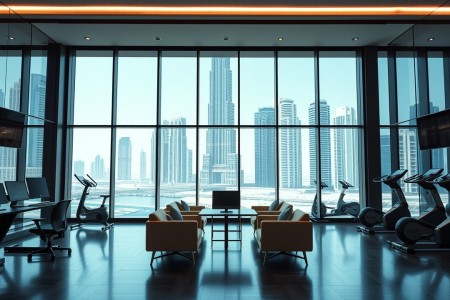
Gyms with Co-Working Lounges in Dubai: The 2026 Executive Guide to Hybrid Fitness

 by
by