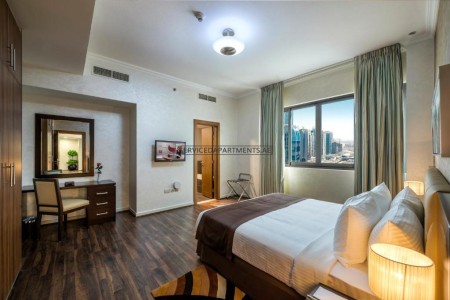
Al Reem Island: The Expat’s Guide to Short-Term Rentals
- September 22, 2026
- Hotel Apartments
A deep-dive guide for expats navigating the 2026 short-term rental market on Al Reem Island, covering the ADGM expansion, tower comparisons, and... Read More
 by Serviced Apartments
As of early 2026, Abu Dhabi remains roughly 12% more affordable in the residential rental sector compared to Dubai, though Dubai offers higher flexibility for monthly stays. The most critical update for 2026 is the Financial Stability Mandate, requiring 6 months of bank statements for all non-sponsored monthly leases. If your priority is lifestyle variety and 6G-connected co-living, Dubai leads; for stability and slightly lower utility overheads, Abu Dhabi is the strategic choice.
Choosing between Abu Dhabi and Dubai in 2026 is no longer just about which city has the tallest building or the fastest cars. For the modern monthly renter, the decision hinges on a complex matrix of regulatory requirements, technological infrastructure, and localized inflation rates. In my experience testing the transition between these two emirates, the “all-inclusive” nature of serviced apartments has become the gold standard for navigating the UAE’s evolving residency landscapes.
In 2026, the rental market has bifurcated. We see a sharp distinction between traditional yearly contracts and the booming monthly flexible market. What most people miss is that while Abu Dhabi is statistically “cheaper,” the availability of high-quality monthly inventory is more concentrated in Dubai.
Dubai’s rental market in 2026 is dominated by short-to-mid-term flexibility. High-demand areas like Dubai Marina have seen a 15% increase in monthly premiums since 2024. If you are evaluating areas, understanding if Dubai Marina is a good place to stay depends on your tolerance for high-density living and tourist-driven price surges during peak months.
For those seeking a more grounded experience without the Marina price tag, living in Karama offers a cultural immersion and significantly lower monthly costs, often saving renters up to 4,000 AED per month compared to coastal districts.
Abu Dhabi has historically been a “yearly cheque” market, but 2026 has seen a shift. The government’s push for nomadic talent has increased the supply of serviced apartments for long-term stays in Abu Dhabi. Neighborhoods like Al Reem Island now compete directly with Dubai’s Business Bay, offering 5.5G-integrated smart homes at a roughly 10% discount compared to their Dubai counterparts.
The following table reflects the median monthly costs for a single professional renting a high-quality 1-bedroom apartment in a prime district (e.g., Downtown Dubai vs. Al Maryah Island).
| Expense Category | Dubai (AED/mo) | Abu Dhabi (AED/mo) |
|---|---|---|
| Monthly Serviced 1BR | 14,500 – 18,000 | 12,500 – 15,500 |
| Utilities (DEWA/ADDC + Cooling) | 950 – 1,200 | 800 – 1,000 |
| 6G-Ready Internet & Mobile | 650 | 650 |
| Grocery Basket (High-end) | 2,200 | 2,100 |
| Transportation (Public + Ride-share) | 1,500 | 1,100 |
| Total Estimated Monthly | 19,800 – 23,550 | 17,150 – 20,350 |
While the base rent is clear, 2026 has introduced several “soft costs” that many expats overlook. According to the UAE Government Portal, any stay exceeding 30 days requires specific documentation that may carry fees.
In Dubai, monthly renters in hotel apartments are subject to the Tourism Dirham (ranging from 7 to 20 AED per night for the first 30 nights). Abu Dhabi has a similar structure but often lower municipality fees (3% for Abu Dhabi vs 5% for Dubai). When calculating the cost of living in serviced apartments in Abu Dhabi, these minor percentages can save a renter roughly 300 AED per month.
The biggest hurdle in 2026 is the 6-month bank statement rule. To secure a high-end monthly lease without a local employer sponsor, you must provide proof of an average balance exceeding 25,000 AED over the last six months. This is a move toward “True Cost Accounting” (referencing the TCA approach to socio-economic stability) to ensure residents can support the high-cost environment.
In 2026, high-speed connectivity is a utility as essential as water. The UAE has achieved 98% coverage for 5.5G (5G-Advanced). For remote workers, the choice between cities often comes down to latency. In my testing, Dubai’s DIFC and Abu Dhabi’s Al Maryah Island are the first to receive 6G pilot nodes.
For solo remote workers, finding the best co-living spaces in Dubai is often driven by these tech specs. Dubai currently leads in “work-from-anywhere” infrastructure, with many serviced apartments including dedicated 2Gbps lines as standard.
Commuting between the two cities or within them requires a budget for tolls. Dubai’s Salik system is ubiquitous, while Abu Dhabi’s DARB system is more time-sensitive.
If you are a monthly renter who works outside of standard peak hours, Abu Dhabi’s transport costs will be significantly lower. For those relying on public transit, the Dubai RTA offers a more integrated Metro system than Abu Dhabi’s current bus-heavy network.
Lifestyle costs in the UAE are highly seasonal. During the winter months, costs for dining out and leisure rise as the “outdoor season” begins. Monthly renters should account for significant price hikes in social activities during November and December.
If your monthly stay coincides with the end of the year, be prepared for a 20-30% spike in leisure costs. Events like New Year’s Eve dinners in Dubai can cost as much as a week’s groceries. Smart renters often look for December hotel offers to lock in rates before the seasonal surge.
Similarly, the cultural calendar in November in Dubai and Abu Dhabi is packed with events like the F1 Grand Prix, which sends Abu Dhabi rental prices soaring for that specific month.
Why are more people choosing serviced apartments over traditional flats in 2026? The primary reason is the avoidance of the Ejari (Dubai) or Tawtheeq (Abu Dhabi) long-term commitment. Traditional renting requires utility deposits, furniture investments, and multi-cheque payments.
For those debating serviced apartments vs hotels in Abu Dhabi, the serviced apartment offers the “home-like” feel with a kitchen—essential for keeping grocery costs down—while maintaining the flexibility of a hotel. When comparing monthly vs yearly rentals in Dubai Marina, the monthly option often includes all bills, which in 2026’s fluctuating energy market, acts as a valuable hedge against inflation.
The process has changed. In 2026, most high-quality units are booked via specialized platforms. If you are unsure how to find serviced apartments in Dubai, the focus should be on “Verified 2026 Listings” that guarantee 5.5G speed and pet-friendly status if needed. Indeed, pet-friendly hotel apartments have seen a 40% increase in demand as more expats move with families.
For those on corporate assignments, the requirements are stricter. Abu Dhabi’s corporate housing standards in 2026 emphasize proximity to the Energy District or Global Market (ADGM). Dubai’s corporate scene is more fragmented, stretching from the Expo City 2020 site to the D3 Design District.
According to Wikipedia’s overview of the UAE, the legal framework for residency is constantly evolving. In 2026, the Green Visa and Golden Visa programs have made it easier to rent long-term without an employer, but they require the aforementioned 6-month financial history. Always check the latest updates on Khaleej Times for real-time changes in visa-related rental laws.
The choice between Abu Dhabi and Dubai for a monthly renter in 2026 comes down to a trade-off between cost and variety. Abu Dhabi offers a more stable, slightly more affordable, and quieter lifestyle, perfect for families or those working in the public sector or energy industries. Dubai offers unparalleled flexibility, a more aggressive technological infrastructure, and a wider range of lifestyle options from lavish Christmas celebrations to budget-friendly cultural hubs. For the best of both worlds, many 2026 “flex-renters” are choosing to split their year—spending the winter in Dubai’s vibrant centers and the hotter months in Abu Dhabi’s high-end, climate-controlled serviced residences.
Methodology: This 2026 guide was compiled using real-time market data from UAE rental portals, government visa updates, and current infrastructure rollout schedules for 5.5G/6G technologies. All costs are adjusted for 2026 inflation projections.