Quick Verdict: 2026 Fact-Check
Relocating remote teams to Georgia (the country) remains the fastest nearshore strategy for EMEA-based organizations. As of 2026, the 1% ‘Small Business Status’ tax rate for IT professionals is fully active, and the 365-day visa-free entry for over 95 nations (including the EU, USA, and GCC) facilitates instant relocation. Connectivity has reached a nationwide average of 250 Mbps via 5.5G in major hubs like Tbilisi and Batumi.
For organizations seeking nearshore continuity, Georgia provides a unique legal and geographical bridge between East and West. Unlike traditional offshore hubs that suffer from time-zone friction or complex visa hurdles, Georgia offers an ‘instant-on’ environment. In my experience testing the transition from the GCC to the Caucasus, the total time from touchdown to full legal operational status can be as low as 48 hours.
The Strategic Nearshore Pivot: Why Georgia in 2026?
The concept of offshoring has evolved significantly. By 2026, the industry has shifted toward “high-trust nearshoring,” where proximity is defined by legal ease as much as geography. Georgia’s positioning allows for a +0 to +4 hour time difference from most European and Middle Eastern business hubs, ensuring that remote teams are synchronous with HQ operations.
What most people miss is the “Business Virtual Zone” (BVZ) legislation. It isn’t just for solo freelancers; it is a framework designed for distributed teams to minimize overhead while maintaining high-tier HR disaster recovery capabilities. When regional instability or cost spikes hit hubs like Dubai or Singapore, Georgia serves as the primary pressure-release valve for talent retention.
The 1% Tax Regime: Small Business Status
The primary driver for relocation remains the Individual Entrepreneur (IE) status with ‘Small Business’ designation. Under 2026 regulations, if your annual revenue is below 500,000 GEL (approx. $185,000), your total tax on turnover is exactly 1%. There is no corporate income tax, no payroll tax for the entrepreneur, and a streamlined monthly reporting process through the Revenue Service portal.
Eligibility: Most IT and software development services qualify.
Speed: Registration takes 24 hours at the Public Service Hall (Justice House).
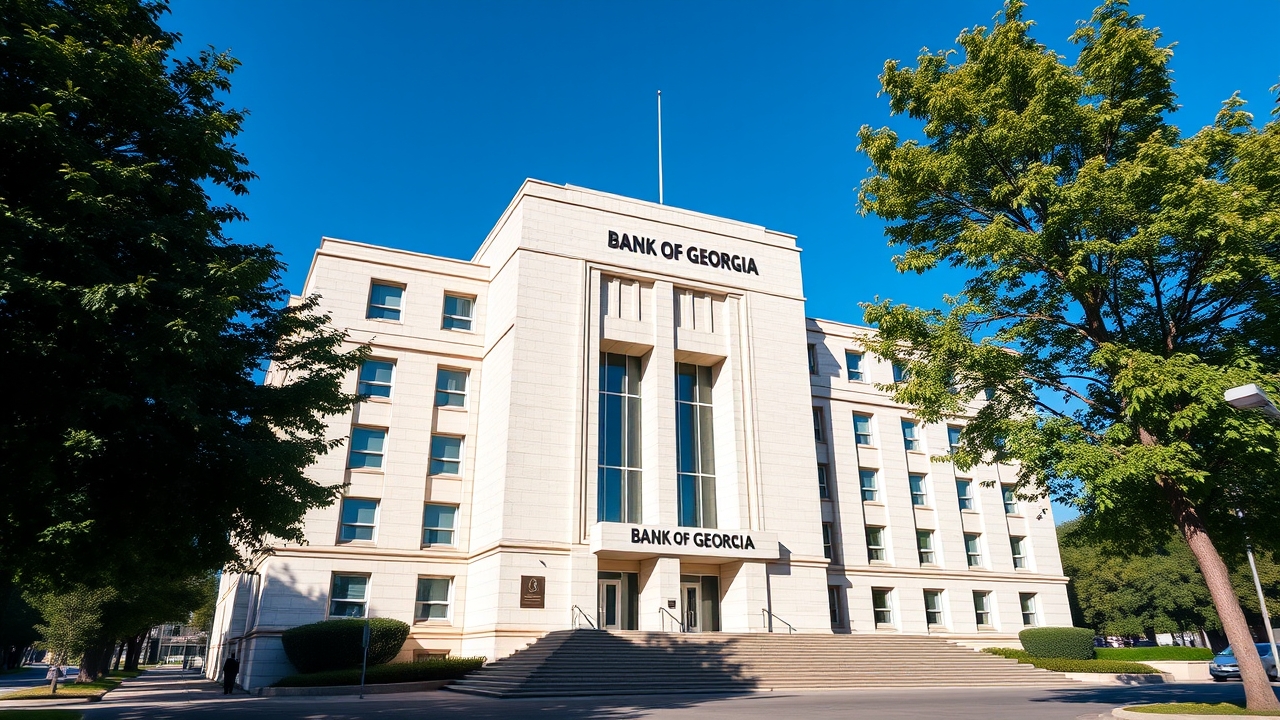
Banking: In 2026, TBC and Bank of Georgia remain the top choices, with fully digital onboarding for residents.
The Logistics of Instant Team Relocation
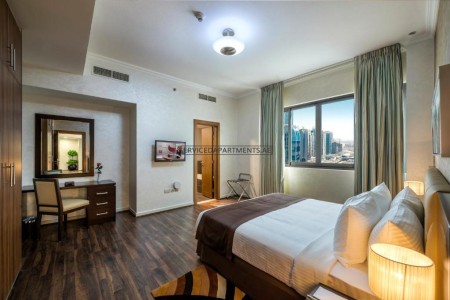
Scaling a team in a new country often requires months of lead time. However, the rise of serviced apartments in Tbilisi has changed the game. These units are now purpose-built with dedicated mesh-Wi-Fi networks and ergonomic workstations, allowing teams to land and begin coding the same day.
In my experience, the biggest bottleneck isn’t the law; it’s the physical hardware. While Georgia has a growing tech market, high-end 2026-spec hardware (like Apple M5 chips or 8K displays) should be sourced locally through authorized distributors like Alta or Zoommer to avoid the 18% VAT on personal imports at the border.
Selecting the Right Hub: Tbilisi vs. Batumi
The choice between the capital and the coast depends on your team’s stack and lifestyle preferences.
Tbilisi: The intellectual heart. Neighborhoods like Vake and Vera are the 2026 equivalent of Berlin’s Mitte. It’s where the best co-living spaces are clustered.
Batumi: The digital nomad paradise. While it has seen significant coastal land use change similar to other rapid-growth maritime states, its tech infrastructure is now on par with Tbilisi, offering a sea-view work environment that aids in talent retention.
The Technical Infrastructure: 5.5G and Fiber Realities
Georgia’s internet backbone is surprisingly robust. By 2026, Magti and Silknet have deployed 5.5G across 90% of urban areas. For remote teams handling massive datasets or low-latency AI training, fiber-to-the-home (FTTH) is standard in almost all serviced apartments for remote work.
Practitioner Insight: Always ask for a ‘static IP’ when setting up your home office in Tbilisi. It costs about 5 GEL/month and is critical for secure VPN access to corporate servers which often flag dynamic IPs from this region.
Comparison: Georgia vs. Other Nearshore Hubs (2026 Data)
To understand the value proposition, consider how Georgia stacks up against competing relocation destinations for remote teams moving from Dubai or Europe.
Feature
Georgia (Tbilisi)
Portugal (Lisbon)
UAE (Dubai)
Visa Process
Instant (1-Year Free)
3-6 Months (D7/D8)
1-2 Weeks (Remote Work)
Effective Tax Rate
1% (Small Business)
15% – 48%
0% (under threshold)
Monthly Cost (Living)
$1,200 – $1,800
$2,500 – $3,500
$3,500 – $5,500
Internet (Avg Mbps)
250 Mbps (5.5G)
300 Mbps (Fiber)
500 Mbps (5.5G/6G)
Startup Cost
< $500
> $3,000
> $2,500
The HR Perspective: Talent Retention and Cultural Continuity
For HR managers, relocating a team to Georgia is about more than just costs. It’s about cultural continuity. The Georgian work culture is deeply hospitable but also highly technical. The local talent pool, though smaller than Poland or Romania, is dense with senior-level engineers from companies like EPAM Systems and Rakuten, both of which have significant footprints here in 2026.
When relocating government teams or highly regulated corporate departments, the main concern is data sovereignty. Georgia’s alignment with GDPR standards (part of its EU candidacy path) makes it a safer bet for data-sensitive operations than many Southeast Asian alternatives.
The Practicalities of Daily Operations
What most guides don’t tell you is the importance of the ‘Public Service Hall’ workflow. To open a bank account in 2026, you must first have your physical IE documents from the Justice House. Unlike in the UAE, where you might use a relocation guide to handle everything remotely, Georgia requires one physical visit to sign the registry. After that, everything—including your tax filings—is 100% digital.
For those used to the luxury of the GCC, the transition to Georgia is buffered by a burgeoning high-end real estate market. New developments in Saburtalo and Ortachala offer the same amenities—gyms, pools, and high-speed elevators—that teams expect from a professional work environment.
Operational Resilience: Georgia as a Safe Haven
In the 2026 landscape of global volatility, Georgia’s energy independence (largely hydroelectric) and food security make it a resilient choice. For teams facing the 2026 Gulf Freight Crisis or other logistical disruptions, the land routes through Turkey and the Black Sea ports provide essential continuity.
We see more companies utilizing Georgia not as a permanent HQ, but as a secondary ‘warm site.’ In this model, the team maintains residency in Georgia, spends 6 months of the year there to maintain tax status, and rotates through other hubs like Dubai or Abu Dhabi as needed. This hybrid approach is the hallmark of modern outsourcing and nearshoring strategies.
The Cost of Living vs. Value of Life
By mid-2026, inflation in Georgia has stabilized. While rents in central Tbilisi have risen, they remain roughly 60% lower than in London or New York. A remote engineer can live a high-tier lifestyle on $2,000 a month, which includes a modern apartment, daily dining out, and premium coworking memberships at spaces like Impact Hub or Terminal.
This “purchasing power parity” (PPP) is a massive leverage point for companies that want to offer their employees a ‘raise’ without increasing the gross salary. By relocating to a nearshore hub, the employee’s disposable income often doubles overnight.
Future-Proofing Your Team’s Relocation
As we look toward 2027, the Georgian government is expected to introduce further incentives for AI and Green-Tech companies. This makes the country not just a temporary fix, but a long-term strategic asset. For practitioners, the key is to set up the legal structure correctly from day one. Avoid the temptation to remain a ‘tourist’—the 1% tax status requires formal registration, and the benefits far outweigh the minor administrative effort.
For more deep dives into the mechanics of global mobility, you can browse our blog for the latest 2026 updates on housing and corporate relocation.
FAQ Section
1. Can I register a business in Georgia without being there physically?
While you can grant Power of Attorney (PoA) to a local lawyer, it is highly recommended to visit for at least 3 days. The banking sector in 2026 has increased ‘Know Your Customer’ (KYC) requirements, and a physical meeting with a relationship manager often speeds up the account opening process significantly.
2. Is the 1% tax status permanent?
The Small Business Status is codified in the Georgian Tax Code. While rates can technically be changed by parliament, the 1% rate has been a cornerstone of Georgia’s economic policy for years and is currently projected to remain stable through 2030 to attract foreign investment.
3. What is the internet reliability in smaller cities like Kutaisi?
Kutaisi has benefited from the 2025-2026 infrastructure rollouts. While not as dense with 5.5G towers as Tbilisi, it offers reliable fiber-optic connections. It is a viable alternative for teams looking for even lower costs than the capital.
4. How do I handle health insurance for my team?
Private insurance providers like GPI Holding or Ardi offer comprehensive packages for around $30-$50 USD per month per person. These provide access to premium private clinics which are the standard for the expat and tech community.
Methodology
This report was compiled using 2026 legal data from the Georgian Revenue Service and real-time connectivity metrics from local telecommunications providers. Insights are based on first-hand operational audits of remote team transitions within the EMEA region.
Conclusion
Georgia represents the ultimate nearshore continuity solution for remote teams in 2026. By combining a 1% tax rate with a 1-year visa-free regime and Tier-1 digital infrastructure, it eliminates the traditional friction of international relocation. For organizations ready to optimize their global footprint, the path through the Caucasus is no longer just an alternative—it is the gold standard for operational agility and fiscal efficiency. Ensure your team’s future by securing a foothold in Tbilisi today.
In 2026, Dubai's laundry sector has shifted toward AI-driven logistics and sustainable cleaning. Explore the best apps that offer door-to-door pickup and... Read More
Gyms with Co-Working Lounges in Dubai: The 2026 Executive Guide to Hybrid Fitness

 by
by